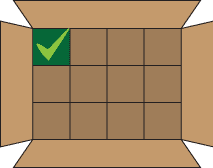
Product packaging size: 1 packing slot(s) | Content: 0,70 l
A highly popular anise-flavored liqueur, Molinari Sambuca Extra was first produced in 1945 by Angelo Molinari. Following this, it became incredibly popular in Italy, with many saying it helped to popularize Sambuca in the country. Molinari Extra is a sweet and strong liqueur, anise-flavored, prepared with a recipe that the Molinari family will never reveal, made from star anise seeds, sugar, herbs and fine, precious spices. Molinari is a premium product; the “Extra” in the name testifies to the superior quality of our Sambuca.
The bouquet is incredibly spicy with notes of black pepper, aromatic anise and hints of liquorice. On the palate, the rich texture spreads with flavors of coriander, aniseed and liquorice. In the background you notice a subtle sweetness that has a spicy and long-lasting finish.
Molinari Sambuca Extra is a traditional Italian liqueur that is flavored with essential oil extracted from star anise through steam distillation. Finished by adding selected sugars and natural flavorings, Molinari is often served after dinner with 3 coffee beans ('con la mosca') which are added to each glass for good luck.
For every occasion and celebrations to enjoy the night by yourself or with your friends and family, you’ve come to the right place as we only sell quality, excellence, and more! So come and take this opportunity to buy online Molinari.
Product packaging size
We can safely pack in one box 12 pcs of this product (normal sized 0,50, 0,70, 1 ja 1,25 litre bottles)
1001Spirits is modern bordershop selling various range of beverages, spirits, soft and energy drinks. Our warehouse is located in Harrislee, Germany near Denmark border.
From our sortiment you can find over +5000 products from leading brands, distilleries and breweries around the globe. We've famous brands such as Jack Daniel's, Jägermeister, Carlsberg, Heineken, Kopparberg, Rekorderlig, Jim Beam, Smirnoff, Russian Standard, Captain Morgan and hundreds more.
We sell customers worldwide products to pickup from our warehouse in Harrislee. You can use your chosen shipping carrier and/or company to ship securely packed goods even straight to your doorsteps.
Ordering from 1001Spirits is easy and fast - we sell worldwide. Only people above legal drinking age in their home countries are allowed to buy alcohol products from our shop online.
Add chosen products to shopping cart and finalize your order by paying the order. During your shopping process you'll see ads from shipping companies that offer shipping solutions for our products.
Packing and processing times
You can always see most up to date stock info on products from our webstore. We also strive to manage as up to date as possible availability info on all preorder products that are in sale on our webshop.
Typically we pack all orders within 1-4 working days from receiving confirmation from you and/or your chosen shipping company.
During high season (i.e. spring/summer, Christmas, New Year) there might be some delays in packing and/or suppliers deliveries to our side. We will inform highseasons in our webstore so its visible if there is likely to be longer packing times.
We're not responsible for delays caused by natural phenomenom (forest fires, floods...), collective actions or some other unexpected events.
Product info, vintages and ABV's
We work hard to provide as much and as accurate as possible product info for our customers via our webstore.
Always there is possibility for typing errors, wrong info from supplier or just by our purposeless errors. We reserve right to make mistake and have wrong info for some spesific product.
Vintages can varie between deliveries, we strive to manage up to date data, but sometimes its impossible to keep records good all the time.
Paying your order
We've wide variety of payment methods from Europe's leading payment services, banks, credit cards and credit companies.
Our payment methods include credit cards, direct bank payments, partpayments and invoice services from various credit companies.
Up-to-date terms of payment services and methods can be found from each payment provider.
Paytrail Plc acts as a collecting payment service provider and is an authorized Payment Institution. Paytrail Plc will be shown as the recipient on your bank or credit card statement. Paytrail Plc will forward the payment to the merchant. For reclamations, please contact the website the payment was made to.
Paytrail Plc Innova 2 Lutakonaukio 7 40100 Jyväskylä Phone: +358 207 181 830 Business ID 2122839-7
1001Spirits sales all products inside Germany, free for pickup inside our warehouse. Customer is responsible to handle shipping from our warehouse with chosen shipping company. We're never arranging shippings for 1001Spirits customers.
Inside our webstore some shipping companies have placed their ads, but you're 100% free to choose your shipping company which you ever want or you can come and pickup the order by yourself from our warehouse located at Grönfahrtweg 5, 24955 HARRISLEE
We reserve right to change out of stock product to similar, replacing product without notification for customer.
If product is temporarily out of stock and it can't be immediately replaced with similar product AND/OR product is missing from order due error in packing, we will make refund AND/OR gift card to cover the difference. 1001Spirits is never shipping any products for customer AND/OR handling shipping behalf of customer.
We're always trying to keep our stock data as accurate as possible. We also try to inform as fast as possible for customer if there is significant changes or missing products in his/her order.
Cancelling and/or returning the order
After we've sent packing notification via email, there is no possibility for changes in order. Order can be returned in original condition to our warehouse by customers own shipping. We're not handling shippings in any case.
Missing products and/or damages in order
If your order is missing products and shipping packages look fine, please contact our support via email support@1001spirits.com. Attach images of 1) transport package of order and 2) products you've received
If your order is damaged during shipping or there is leaking products, please contact your chosen shipping company to solve the situation. 1001Spirits is not part of shippings, so all shipping damages are handled with your chosen shipping company.
Prices and taxes
All our prices are inclusive of Germany alcohol and value-added taxes.
In some countries you're responsible to provide order info for your country tax authorities. You're responsible to pay possible local alcohol taxes and other duties. 1001Spirits is not providing any pre-info for any tax authorities in any country customer is shipping the order. Follow guidelines in your destination country and consult local authorities if needed.
Company / legal details
1001Spirits is based in Germany.
Our support can be reached via support@1001spirits.com typically in 48 hours on Germany business days. We serve you in germany, english, finnish and swedish at the moment.
1001Spirits is managed by B Office GmbH (DE318767726 - Court: District Court Flensburg HRB 12943 FL), Suederstrasse 75, 24955 Harrislee - Court: District Court Flensburg HRB 12943 FL
All our prices are inclusive of Germany taxes (alcohol and value-added). We sell worldwide but we're not handling shippings. Customers are responsible to take care of local responsibilities and provide needed info for local authorities.